Care Home Clinical Waste Collection & Disposal Services
Fully Compliant Clinical Waste Disposal for Care Homes & Nursing Homes
Fully Compliant Clinical Waste Disposal for Care Homes & Nursing Homes
Fully Compliant Clinical Waste Disposal for Care Homes & Nursing Homes
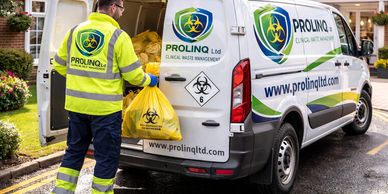
Prolinq Ltd provides professional, fully licensed care home clinical waste collection and disposal services across Kent, Surrey, Sussex, Hampshire and surrounding areas.
We support residential care homes, nursing homes and specialist care facilities with reliable, compliant and cost-effective healthcare waste management solutions, ensuring full adherence to HTM 07-01 guidance, CQC requirements and Environment Agency regulations.
If your care home produces clinical or medical waste, we deliver a dependable service designed to keep your facility compliant, safe and inspection-ready.
Fast response for urgent collections and missed service cover
Clinical Waste Management for Care Homes
Fully Compliant Clinical Waste Disposal for Care Homes & Nursing Homes
Fully Compliant Clinical Waste Disposal for Care Homes & Nursing Homes

Care homes and nursing homes generate a range of regulated healthcare waste streams that must be safely segregated, stored and disposed of under UK law.
We provide comprehensive care home waste disposal services, including:
- Sharps bin collection
- Infectious waste disposal
- Offensive waste collection
- Pharmaceutical waste disposal
- Cytotoxic and cytostatic waste handling
- Incontinence and hygiene waste management
Our services are tailored to the operational needs of residential and nursing care environments.
Sharps Disposal for Care Homes
Fully Compliant Clinical Waste Disposal for Care Homes & Nursing Homes
Infectious & Offensive Waste Collection

Many care homes regularly generate sharps waste through the administration of insulin, vaccinations, injectable medicines and other clinical treatments. Safe sharps disposal is essential to protect residents, staff and visitors while ensuring compliance with HTM 07-01 guidance and Care Quality Commission (CQC) requirements.
We supply and collect the correct colour-coded sharps containers for every waste stream, including:
- Orange-lidded sharps bins (non-medicinal sharps)
- Yellow-lidded sharps bins (medicinally contaminated sharps)
- Purple-lidded sharps bins (cytotoxic and cytostatic sharps)
Our service covers the collection and disposal of insulin needles, syringes, lancets, pen needles, scalpels and other contaminated sharps. Every collection is carried out by our fully licensed team, with complete Duty of Care documentation and hazardous waste paperwork provided where required.
Whether your care home requires routine scheduled sharps collections or an urgent additional collection, Prolinq Ltd provides a safe, reliable and fully compliant sharps disposal service across Kent, Surrey, Sussex, Hampshire, Essex & the wider South East
Infectious & Offensive Waste Collection
Fully Licensed & CQC-Compliant Care Home Waste Disposal
Infectious & Offensive Waste Collection
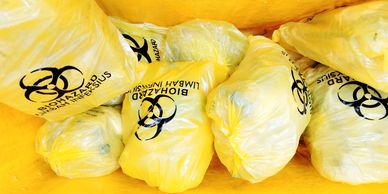
Care homes generate a variety of infectious and offensive waste streams every day, all of which must be correctly segregated, stored and disposed of in accordance with UK healthcare waste regulations. Proper waste segregation helps protect residents and staff, supports regulatory compliance and reduces unnecessary disposal costs.
We provide fully compliant collection and disposal services for both infectious and offensive healthcare waste, including:
• Contaminated dressings and wound care materials
• Swabs and bandages
• PPE contaminated with bodily fluids
• Isolation room waste
• Hygiene products and incontinence waste
• Non-infectious but offensive waste
• Disposable wipes and protective clothing
Using the correct colour-coded waste bags and treatment routes, our experienced team ensures every waste stream is collected safely, transported securely and disposed of responsibly. Every collection includes the appropriate waste documentation, giving your care home confidence that its clinical waste is being managed safely, efficiently and in line with current legislation.
Whether you operate a residential care home, nursing home or dementia care facility, Prolinq Ltd provides reliable scheduled collections and flexible waste management solutions tailored to your organisation’s needs.
Pharmaceutical Waste Disposal for Nursing Homes
Fully Licensed & CQC-Compliant Care Home Waste Disposal
Fully Licensed & CQC-Compliant Care Home Waste Disposal
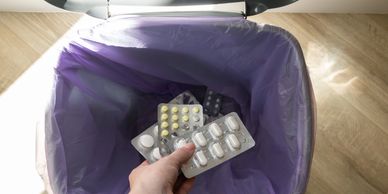
Care homes regularly produce pharmaceutical waste that must be managed safely to protect residents, staff and the environment. Prolinq Ltd provides secure pharmaceutical waste collection for residential care homes, nursing homes and assisted living facilities, ensuring unwanted medicines are handled and disposed of using the correct treatment methods.
Our pharmaceutical waste collection service includes:
- Expired medicines
- Partially used medication
- Controlled drugs (where authorised)
- Cytotoxic and cytostatic medicines
- Medicine packaging containing pharmaceutical residues
Every collection is carried out by our fully licensed team using secure transport and complete waste documentation. We can also advise on the correct segregation of pharmaceutical waste, helping care homes reduce disposal costs while ensuring medicines are stored, collected and disposed of safely.
Whether you require routine scheduled collections or additional pharmaceutical waste collections, Prolinq Ltd provides a reliable service tailored to the needs of your care home.
Fully Licensed & CQC-Compliant Care Home Waste Disposal
Fully Licensed & CQC-Compliant Care Home Waste Disposal
Fully Licensed & CQC-Compliant Care Home Waste Disposal

Prolinq Ltd is an Environment Agency registered waste carrier. Every care home collection includes:
- Waste transfer notes
- Hazardous waste consignment notes (where required)
- Duty of Care documentation
- Secure and traceable transport
Our services align with:
- HTM 07-01 Safe Management of Healthcare Waste
- Environmental Protection Act
- Hazardous Waste Regulations
- CQC inspection standards for care homes
We understand the compliance pressures facing care providers and ensure your documentation is audit-ready.
Flexible Waste Collection Schedules for Care Homes
Clinical Waste Collection for Care Homes Across the South East
Flexible Waste Collection Schedules for Care Homes

Every care home operates differently, which is why Prolinq Ltd provides flexible clinical waste collection schedules tailored to your facility, resident numbers and waste volumes. Whether you require routine weekly collections, fortnightly visits or monthly services, we can create a collection schedule that keeps your premises compliant without unnecessary costs.
Unlike many providers, we can also respond quickly when circumstances change. If your current waste contractor has missed collections, your waste volumes increase unexpectedly or you require an urgent collection following an inspection or infection outbreak, our rapid-response emergency collection service helps ensure your care home remains compliant and safe.
Our flexible collection options include:
- Weekly clinical waste collections
- Fortnightly collection schedules
- Monthly waste collections
- Emergency clinical waste collections
- Additional seasonal collections
- Multi-site care home contracts
- Flexible contract arrangements as your needs change
Our goal is to ensure your clinical waste is collected before storage limits are exceeded while providing a reliable service that care home managers can depend on.
Care Homes We Support & What's included
Clinical Waste Collection for Care Homes Across the South East
Flexible Waste Collection Schedules for Care Homes

We provide clinical waste collection services for:
- Residential care homes
- Nursing homes
- Dementia care facilities
- Assisted living facilities
- Specialist care centres
- Multi-site care providers
- Mental Health Care Facilities
- Learning Disability Care Homes
Whether you operate a small residential home or a large nursing facility, we provide scalable and compliant waste management solutions.
Care Home Clinical Waste Services Included
- Clinical waste collection ✓ Included
- Sharps disposal ✓ Included
- Pharmaceutical waste disposal ✓ Included
- Infectious waste collection ✓ Included
- Offensive hygiene waste collection ✓ Included
- Anatomical waste disposal ✓ Included
- Colour-coded clinical waste containers supplied ✓ Included
- Waste segregation guidance ✓ Included
- Duty of Care documentation ✓ Included
- Hazardous waste consignment notes (where required) ✓ Included
- CQC compliance support ✓ Included
- Emergency clinical waste collections ✓ Available
- Flexible weekly, fortnightly and monthly schedules ✓ Included
- Multi-site care home contracts ✓ Available
- Dedicated customer support ✓ Included
- Fully licensed Environment Agency registered waste carrier ✓ Included
Clinical Waste Collection for Care Homes Across the South East
Clinical Waste Collection for Care Homes Across the South East

We provide reliable clinical waste collection services for care homes and residential care facilities across the South East of England, covering:
- Clinical Waste Collection for Care Homes in Kent
- Clinical Waste Collection for Care Homes in Essex
- Clinical Waste Collection for Care Homes in Sussex
- Clinical Waste Collection for Care Homes in Surrey
- Clinical Waste Collection for Care Homes in Hampshire
Our fully licensed team supports care homes with safe, compliant disposal of clinical waste, sharps and hygiene waste.
👉 Explore clinical waste services for care homes across the South East
Why Care Homes Choose Prolinq Ltd
Care home managers need more than a waste carrier—they need a dependable compliance partner. Many organisations move to Prolinq Ltd after experiencing missed collections, inconsistent communication or concerns over documentation provided by previous contractors.
We specialise in supporting residential care homes, nursing homes, dementia care facilities and assisted living providers with reliable clinical waste management designed around CQC requirements and HTM 07-01 guidance.
Why choose Prolinq?
✔ Environment Agency Registered Waste Carrier
✔ Fully CQC-compliant documentation
✔ Reliable scheduled collections
✔ Emergency collection service available
✔ Dedicated account management
✔ Waste segregation advice to reduce disposal costs
✔ Flexible contracts with no unnecessary collections
✔ Fast quotations and straightforward onboarding
Our experienced team understands the operational pressures faced by care providers and works alongside your staff to ensure waste management never becomes a compliance concern.
Why Choose Prolinq”
What Happens After You Contact Us?
Switching clinical waste providers is straightforward.
Our simple onboarding process helps your care home remain compliant from day one.
Step 1 – Request Your Quote
Contact our team with details of your care home, waste streams and collection requirements.
Step 2 – Waste Assessment
We’ll recommend the correct waste containers, collection frequencies and documentation required for your facility.
Step 3 – Delivery & Setup
We deliver compliant waste containers, labels and collection schedules while ensuring your team understands correct waste segregation procedures.
Step 4 – Reliable Scheduled Collections
Our licensed collection team carries out your collections on schedule, providing all Duty of Care paperwork and hazardous waste documentation where required.
Should your requirements change, additional collections and emergency collections can be arranged quickly.
Get a Quote for Care Home Clinical Waste Collection

If your care home requires reliable, compliant and professional clinical waste disposal, contact Prolinq Ltd today.
Call our team to discuss your requirements or request a fast, no-obligation quote using our online enquiry form.
Prolinq Ltd delivers dependable and fully compliant care home waste collection services across the South East.